It usually starts after another fight, another broken promise, or another night of not knowing where he is — that’s when families start typing into Google. And two phrases keep showing up over and over: de-addiction centre and nasha mukti kendra. Ask ten people in Delhi what the difference is, and you’ll probably get ten different answers. Some will swear they’re not the same thing at all. Others will shrug and say it doesn’t matter.
Truth is, it’s a bit of both.
Where “De-Addiction Centre” Comes From
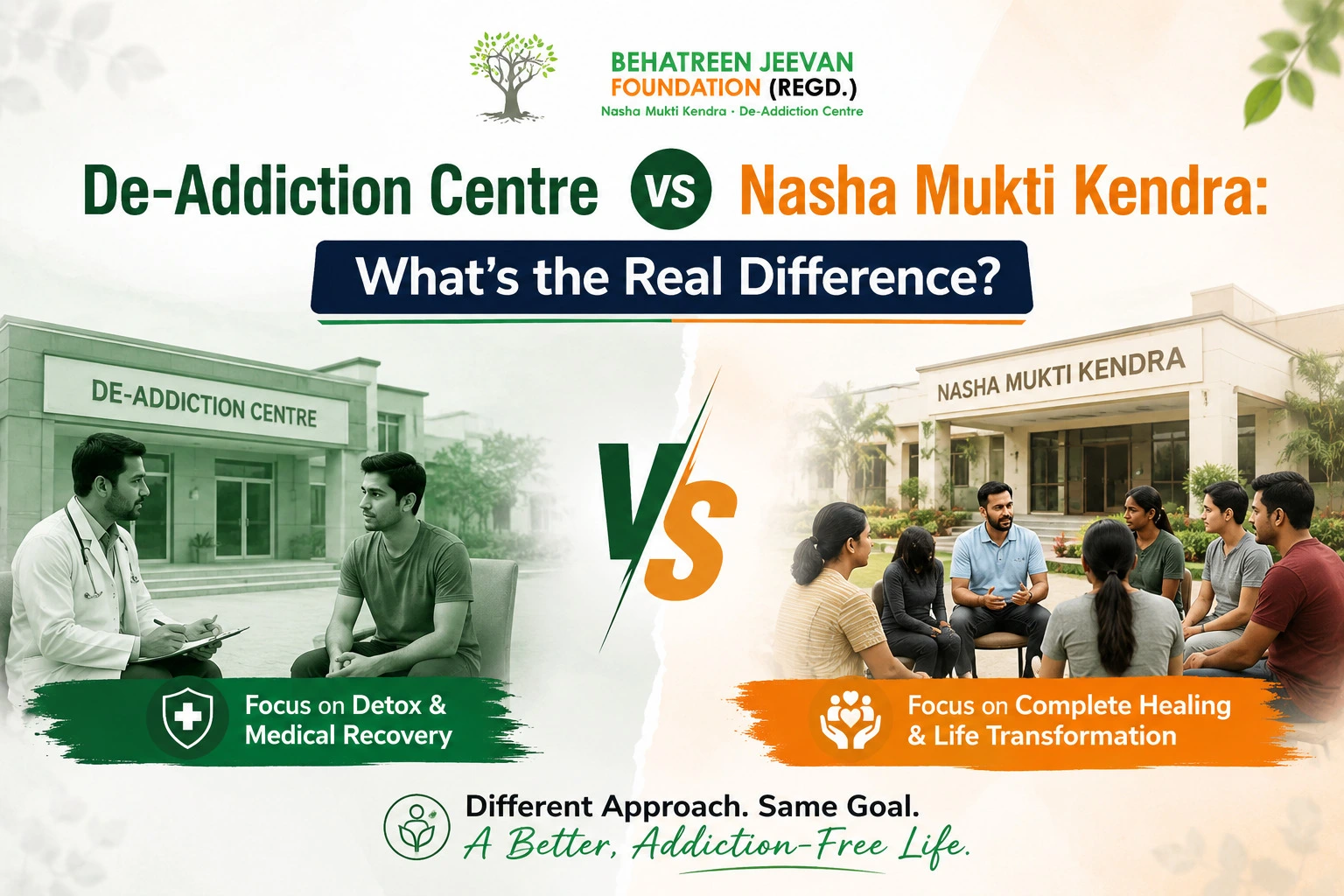
This is the term you’ll see on hospital letterheads, government health portals, and insurance forms. It’s the clinical name — the one doctors use, the one that shows up when a facility is officially registered. There’s nothing wrong with that; it just means the language leans formal.
A place calling itself a de-addiction centre is usually pointing to:
- Medically supervised detox
- A psychiatrist involved somewhere in the process, not just support staff
- Structured therapy — one-on-one sessions and group work
- Some kind of plan for after discharge, not just a clean exit
It’s the vocabulary of paperwork, basically. Precise, a little cold, but accurate.
Where “Nasha Mukti Kendra” Comes From
Now here’s the interesting part. Nasha mukti kendra isn’t a lesser or informal version of the same thing — it’s arguably the more honest term, because it’s what people actually say out loud. Nobody calls their brother-in-law and says “we’re admitting him to a de-addiction facility.” They say nasha mukti kendra. It’s rooted in how North Indian families actually talk about addiction and recovery.
Functionally, a nasha mukti kendra can run the exact same programs — detox, counselling, yoga, 12-step meetings — but there’s often a slightly different texture to it. Sessions might be conducted in Hindi rather than clinical English. There’s more room, culturally, for spiritual or community-based healing alongside the medical side. It doesn’t make it less serious. If anything, it makes recovery feel a little less like a hospital procedure and a little more like something a person can actually sit with.
So Which One Should You Trust?
Here’s what nobody tells families early enough: in Delhi, Noida, Ghaziabad, most facilities use both terms — sometimes on the same page of the same website. There isn’t a law that says a nasha mukti kendra can’t offer full medical detox, or that a de-addiction centre has to be sterile and impersonal. The naming difference is mostly cultural, not regulatory.
What should actually decide where you send someone you love isn’t the sign outside. It’s what’s happening inside. Before you commit, it’s worth pushing past the branding and asking:
- Who’s actually supervising withdrawal — a psychiatrist, or just staff on rotation?
- Is there a real treatment plan built around this specific person, or a one-size-fits-all schedule?
- Does the facility screen for dual diagnosis treatment, in case anxiety or depression is sitting underneath the substance use?
- What happens on day 22, after the program technically ends?
- Are families brought into the process, or kept at arm’s length?
Rehabilitation isn’t just detox. It’s everything that comes after — the therapy, the relapse-prevention work, the slow rebuilding of trust at home. A facility that only focuses on the first two weeks and calls it done isn’t offering rehabilitation centre level care, whatever it calls itself on the gate.
Why Two Names Exist for One Journey
There was never a single body in India that sat down and decided which term facilities should be used. “De-addiction centre” stuck around because it fit into medical registration and hospital branding. “Nasha mukti kendra” survived because it’s what real people said to each other in real conversations, long before Google existed to search it. Over time, “rehabilitation centre” joined in too, usually describing the longer arc — not just getting clean, but staying clean.
So really, you’re not choosing between three different things. You’re looking at three names circling the same process: detox, treatment, and the long, unglamorous work of staying sober afterward.
What This Actually Comes Down To
If you’re reading this because you’re going through it right now, here’s the part that matters more than terminology: find a place where the staff talk to your family member like a person, not a file number. Somewhere that doesn’t flinch when things get messy, because recovery is almost never a straight line. There will be setbacks. There will be days that feel like nothing’s working.
Whatever name is on the board outside — de-addiction centre, nasha mukti kendra, doesn’t matter — the good ones share one thing. They don’t treat addiction like something to be ashamed of. They treat it like what it is: a medical condition that happened to a real person, someone who still deserves patience and respect while they work through it.
So don’t let the sign outside make the decision for you. Visit the place if you can manage it. Sit down with the counselors, not just the front-desk staff. Ask the uncomfortable questions. And trust what you feel when you walk out — whether it felt like a place your loved one could actually begin again.
Frequently Asked Questions
Is a Nasha Mukti Kendra the Same as a De-Addiction Centre?
In most cases, yes. Both terms generally refer to centres that help people recover from substance use. “De-addiction centre” is a more formal term, while “Nasha Mukti Kendra” is commonly used in India.
Which Is Better: A De-Addiction Centre or Nasha Mukti Kendra?
The name alone does not determine the quality of a centre. Look for proper licensing, qualified staff, personalised care, safe treatment practices, and a clear aftercare plan.
Do Nasha Mukti Kendras Offer Medical Detox?
Many established centres provide supervised detox along with counselling and other recovery-focused activities. Before choosing a centre, families should confirm how withdrawal is managed and whether qualified professionals are available when needed.
How to Choose a Rehabilitation Centre in Delhi NCR?
Check the centre’s credentials, treatment approach, staff qualifications, detox arrangements, family involvement, and aftercare services. It is also helpful to visit the centre and ask questions before making a decision.
Why Is Family Involvement Important During Treatment?
Family involvement can provide emotional encouragement and help create a supportive environment during recovery. Family counselling can also help loved ones understand recovery and learn how to offer appropriate support.