
Written by: Editorial Team | Medically Reviewed by: Dr. Akhil Dhanda (Reg. No. UPMC-59977)
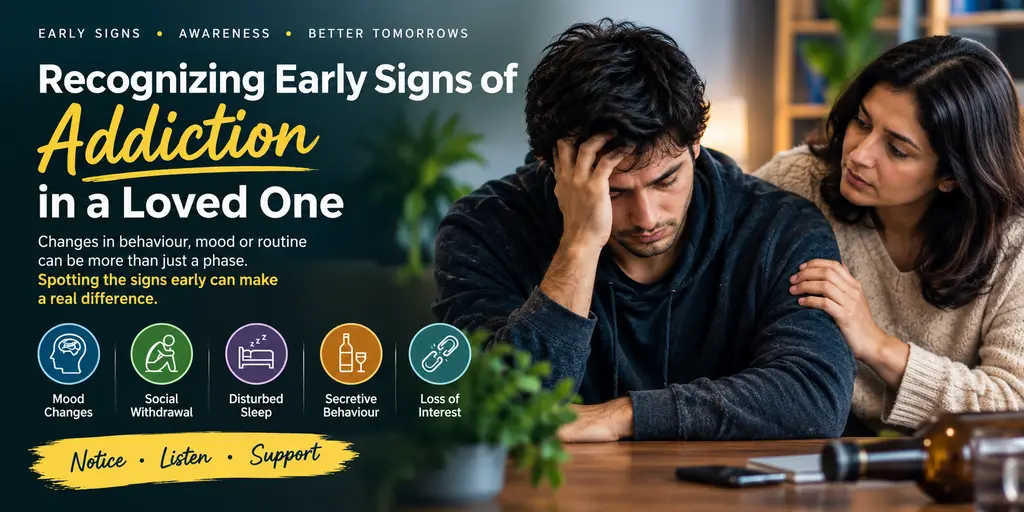
Nobody sits down one evening and says, “My son is an addict.” It never happens like that. First he skips Sunday lunch. Then your daughter says she’s tired, for the fifth time this month. Your husband pours a drink at noon and calls it a long weekend. Each thing has a perfectly reasonable explanation, and you accept it, because the other explanation is hard to say out loud.
That’s denial, and it isn’t only the person using it who practises it. Families do too. It’s exams, it’s stress, it’s those new friends. It’ll pass. Sometimes you wait a whole year.
The early warning signs of addiction are quiet. They sit in money, in moods, in routines, in small lies that don’t quite add up. Talking to someone who still has a job, still lives at home and still listens is a different job from talking after a hospital visit or a police call.
Below is what to watch for, and what to do once you’ve seen enough to worry.
Key Behavioral Changes to Watch For in a Loved One
Behaviour usually changes first. The behavioral signs of drug addiction often show up around the house long before anything physical does.
Unexplained Financial Trouble or Sudden Need for Money
Start with money, because it’s hard to hide for long. Your brother earns a decent salary, yet he’s borrowing from cousins. Cash goes missing from a drawer. A gold chain or a laptop vanishes and the story keeps changing. Bills stay unpaid with no change in income.
Substances cost money, and the habit tends to grow. The urgent calls never seem to stop, with every caller presenting a different explanation.
Secrecy, Isolation, and Changing Social Circles
The phone now sits face down. They step outside for calls. The bedroom door stays locked, and a simple “Where were you?” gets a snapped answer.
Then there are the friends. Old ones stop calling. New ones turn up in the background, people you’ve never met and never will, because you’re not introduced. Some people pull away from everyone and spend whole evenings alone.
Loss of Interest in Daily Responsibilities, Work, or Hobbies
A college student who once loved cricket no longer visits the playground. A woman who was never late for office starts missing deadlines and taking odd days off. A father forgets the school pickup twice in one week.
One bad week means very little. Everybody has those. What matters is a slow slide that runs a month or more, especially when it comes with anything else on this list.
Physical Warning Signs of Substance Abuse
The physical symptoms of substance abuse vary from one substance to the next. No single sign proves anything, so look at the whole picture instead of one odd moment.
Changes in Appearance, Hygiene, and Unexplained Weight Loss
Someone who was always well turned out now wears the same shirt for three days. Baths get skipped. Grooming stops mattering. Weight can swing either way, but sudden loss with no diet or illness behind it is common, and you’ll see it first in loose clothes and a thinner face.
Check the skin as well. Marks on the arms, constant scratching, or full sleeves in Delhi’s summer heat deserve a second look.
Bloodshot Eyes, Dilated Pupils, and Slurred Speech
Red, glazed eyes. Pupils that look far too large, or pinpoint small. Speech that slows down or slurs. Someone who’s sharp at breakfast and “out of it” by afternoon, or who nods off in the middle of a conversation.
Pay attention to cover-ups too. If eye drops, strong mouth fresheners and heavy perfume suddenly become part of the daily routine, ask yourself why.
Disrupted Sleep Patterns, Tremors, and Unexplained Illnesses
Sleep often falls apart. Some individuals remain awake at night and spend their days sleeping. Others sleep far too much. Morning hand tremors may be a warning sign of alcohol dependence. Add stomach trouble, headaches, heavy sweating or colds that keep coming back, and the body is telling you something.
Still, none of this is proof. Many medical conditions share similar symptoms, so a doctor can identify or exclude other causes. But when three or four of these turn up together with the changes in behaviour above, don’t talk yourself out of it.
Psychological and Mood Swings Caused by Addiction
Substances change how the brain handles emotion. Families often say it feels like living with a stranger who happens to look like someone they love.
Extreme Irritability, Sudden Anger, and Paranoia
A calm father starts snapping over nothing. A teenager blows up at a simple “Did you eat?” The anger often peaks when the substance is wearing off, or when you get too close to the truth.
Some people turn suspicious. They think you’ve searched their room, that relatives are talking about them, that someone is watching. They may accuse you of things that never happened. This is more likely with heavy, long-term use of certain drugs, and it’s exhausting to live with.
Emotional Detachment, Anxiety, and Depression
Others go quiet instead of loud. They stop laughing at family jokes. They sit right next to you at dinner and still seem miles away. Anxiety, low mood and a flat kind of hopelessness are common.
It often runs both ways. Some people start using it to cope with anxiety or depression, and the substance makes both worse. If a loved one expresses despair or talks about self-harm, take action immediately without delay. Get professional help that same day.
Differentiating Between Alcohol vs. Narcotic/Drug Abuse
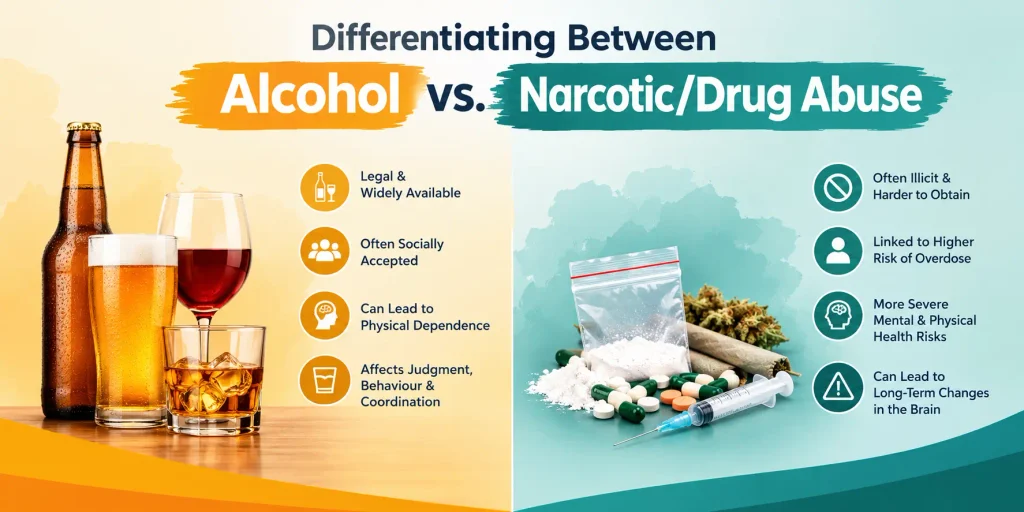
| Alcohol | Heroin (Smack) | Prescription Pills | |
| Common signs | Smell of alcohol, drinking earlier in the day, hidden bottles | Drowsiness, “nodding off,” very small pupils | Pills running out early, mood swings, sedation or restlessness |
| Physical clues | Morning tremors, flushed face, blackouts | Scratching, track marks, constipation | Changes in alertness, slurred speech |
| Behavioral clues | Drinking despite promises to cut down | Secrecy, sudden need for cash, odd hours | Visiting several doctors, claiming lost prescriptions |
| Withdrawal hints | Shaking, sweating, anxiety | Body aches, sweating, restlessness | Varies by medicine |
Knowing roughly what you’re dealing with helps when you describe things to a counsellor or doctor. Treat this table as a rough guide, not a diagnosis. Only a professional can say whether someone is addicted.One thing deserves extra attention. Signs of alcohol dependence often go unnoticed because drinking is widely accepted at weddings, celebrations, and social gatherings. If he can’t stop at one drink, hides bottles, or turns irritable when there’s nothing to drink, take it seriously, even if it looks ordinary at a family function.
How to Respond When You Notice These Early Signs
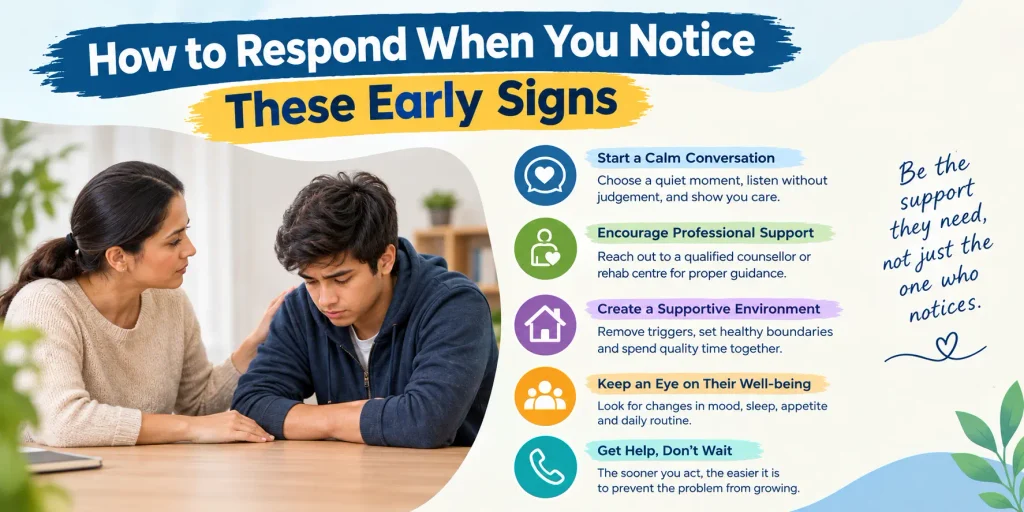
Avoid Confrontation: How to Talk Without Triggering Anger
Don’t raise it in front of relatives, late at night, or when the person is under the influence. Wait for a quiet, sober moment.
Start from worry, not blame. “You’ve seemed tired and distant lately, and I’m worried” goes down far better than “You’re on drugs again.” Stick to what you’ve actually seen. Skip words like “addict” or “drunkard.”
Then mostly listen. The first reaction is often denial or anger, and that’s normal. Don’t take it personally. One talk rarely settles anything, so leave the door open and come back to it calmly.
Seeking Professional Help from a Certified Nasha Mukti Kendra
Once dependence sets in, willpower alone rarely works. Withdrawal can also be physically risky without medical supervision. A professional centre can assess the situation, manage withdrawal safely and support recovery with counselling and structured care.
Need immediate guidance or professional support? Get in touch with our experts today at Contact Us.
Conclusion: Taking the First Step Toward Recovery
You don’t need solid evidence or a complete solution. If something seems wrong, pay attention to your instincts. Write down what you’ve noticed, pick a calm moment to talk, and call a professional for guidance. The earlier someone gets help, the more choices they have, and no family has to work through this alone.
Unsure If Your Family Member Needs Help? Call Our 24/7 Helpline: +91-8929209703
Frequently Asked Questions (FAQs)
Early signs of addiction?
Rarely one big thing. It’s the small stuff stacking up: he’s suddenly guarded about his phone, cash keeps going missing, or her marks have dropped for no clear reason. Give it a few weeks. If the pattern holds, take it seriously.
How to spot drug abuse early?
Start with the eyes and the sleep. Red, glazed eyes, slurred words, someone wide awake at 4 a.m. and dead asleep by noon. Add a new set of friends you’ve never met, and it’s worth a quiet word with a doctor or counsellor.
What if they keep denying?
They probably will, at least at first. Most people do. Don’t argue or go hunting for proof. Tell them you’re worried, mention one or two things you’ve actually seen, and leave it there.
Is alcohol harder to spot?
Usually, yes. Nobody blinks at a drink at a wedding, so the warning signs slip past. Pay attention if they’re pouring one in the morning, hiding bottles, or their hands shake until they’ve had a drink.
When should we seek help?
Sooner than feels comfortable. If the signs keep repeating, or they’re hurting health, work or home life, don’t wait for a crisis. You can call +91-8929209703 any time and talk it through first.
Medical Disclaimer & Review Notice:
This content has been medically reviewed by Dr. Akhil Dhanda (Reg. No. UPMC-59977) to ensure clinical accuracy and adherence to de-addiction recovery standards. The information provided is for educational purposes and should not replace professional medical diagnosis or treatment.



Pingback: The Psychological and Physical Effects of Long-Term Alcohol Abuse: A Family Guide