
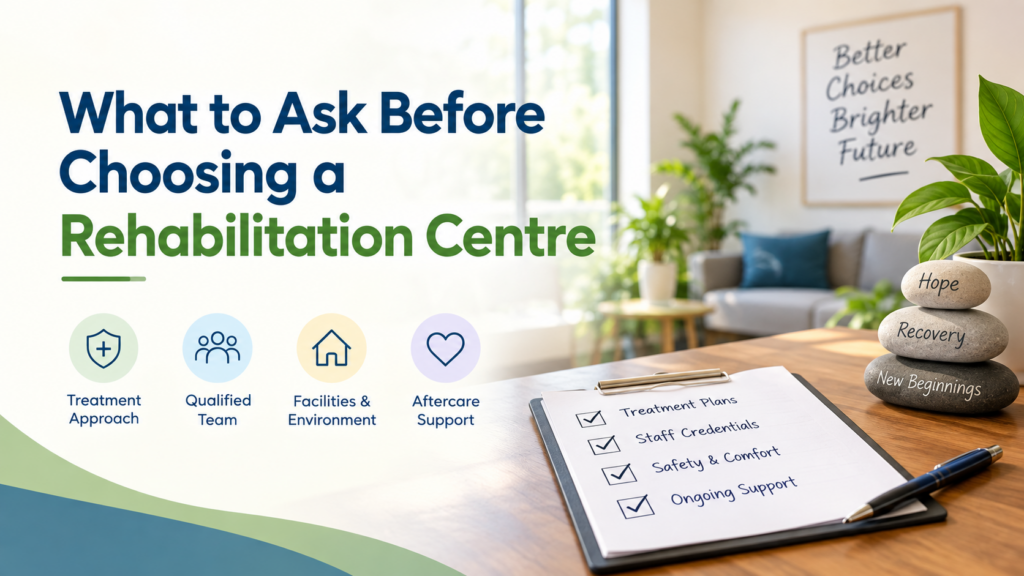
Every brochure says the same thing. Caring staff. Modern facility. Proven results. Fine, sure. But once you’re actually the one making this call for someone you love, none of that tells you anything real. What matters is the stuff nobody puts in the pamphlet — and the only way to get at that is by asking, directly, before you sign anything.
I talked to enough families who’ve been through this to notice a pattern. The ones who ended up somewhere decent almost always asked a specific set of questions upfront. Not after admission. Before.
Who Is Actually Providing The Treatment
Sounds basic, but people skip it more than you’d think. Before admission, ask:
- Is there a qualified doctor on staff, not just someone who drops by occasionally?
- Are the counsellors formally trained and certified, or just experienced through years of informal exposure?
- What’s the real staff-to-resident ratio, both during the day and overnight?
A place with genuine medical oversight won’t stumble over these answers. If you get vague responses, or someone dodges naming actual qualifications — that’s worth noticing.
What Does A Typical Treatment Plan Look Like
If a facility runs the exact same program for every single person, something’s off. Everyone’s situation is different, and a decent plan usually looks like:
- A proper intake assessment covering physical health, mental state, and personal background
- Something built around that specific person, not a copy-paste template
- Regular reassessment as things progress, with room to actually adjust
If the answer sounds rehearsed, or suspiciously identical to what they’d tell anyone else walking in, push a little further.
How Is Medical Safety Handled During The Early Stage
Early days matter most, medically speaking. Worth asking directly:
- Who checks vitals, and how often during this stretch?
- What’s the actual protocol if a complication shows up?
- Is there emergency medical support on-site, or would someone need to be moved elsewhere?
Don’t feel awkward bringing this up. Any serious facility expects it and should walk you through their process in plain terms — not brush past it with something vague.
What Kind Of Therapy Is Actually Offered
“Counselling” means wildly different things depending on who you ask. Find out specifically:
- One-on-one sessions, and how often they actually happen
- Group therapy, and who’s running it
- Whether family is included at any point
- Stress management stuff — yoga, breathing work, mindfulness, whatever they actually offer
This matters more than people assume. Emotional work and physical stabilisation need to go hand in hand, and a program heavy on one but thin on the other tends to show cracks later.
Is Family Involved In The Process
Recovery rarely survives well in a vacuum, away from the people someone’s actually going home to. Ask if the program includes family counselling, education sessions, or structured visits. Ask how they guide families to support someone without slipping back into old habits — over-controlling, avoiding hard conversations, that sort of thing.
If family involvement feels like an afterthought here, that’s a gap that tends to matter more than it seems at first.
What Happens After Treatment Ends
Families rarely think to ask about this part until it’s too late. Once someone actually leaves the facility, what’s waiting for them on the other side matters just as much as what happened inside. Ask directly:
- Is there follow-up support once someone actually leaves?
- Scheduled check-ins, or ongoing sessions built in?
- Access to support groups after discharge?
- A relapse prevention plan, worked out before the person even leaves?
Treatment that just… stops, with no bridge back into normal life, tends to leave people struggling a lot more once they’re on their own. A well-run rehabilitation centre should have this answer ready, not figured out on the spot because you happened to ask.
Where Will This Person Actually Be Living
Request a real look at the place — pictures, a video call walkthrough, an in-person visit if you can manage it. Notice the small things: how bright the rooms are, whether there’s any outdoor space, how tidy the corridors look on an ordinary day nobody prepared for. A dim, cluttered, run-down setting can drag against the mental progress someone is trying to build in therapy sessions elsewhere.
None of this is about chasing luxury. It’s about whether the surroundings feel settled enough that someone can actually breathe and focus on getting better there.
How Transparent Are They About Costs
Get a full, itemised breakdown before committing to anything. Specifically:
- Which services sit inside the standard package, and which ones show up as add-on charges later
- Whether doctor visits, therapy sessions, and medicines are already factored into the quoted price
- What the billing looks like if treatment ends up running past the originally planned duration
Hidden charges or fuzzy pricing usually point to bigger transparency issues somewhere else too.
A trustworthy rehabilitation centre won’t flinch at laying costs out clearly and answering whatever follow-up questions come up.
Can They Provide References Or Past Outcomes
Privacy limits how much any facility can share about past patients, fair enough. But ask general questions anyway — typical outcomes, average length of stay, how progress actually gets measured. Some places share anonymised stories or rough statistics. A flat refusal to discuss any of it, even loosely, is worth noting.
Do They Feel Right For This Specific Person
Beyond every checklist question, trust what you’re actually sensing. Does staff seem genuinely present during conversations, or rushed and scripted like they’ve said this a hundred times today? Does the person you’re trying to help seem at ease with what they’ve seen so far? Sometimes the real answer comes down to gut feeling, built quietly on top of everything else you’ve already learned.
Making An Informed Decision
This isn’t something to rush based on a slick website or a smooth sales call. Asking direct, specific questions upfront saves everyone from unpleasant surprises down the line. A place worth choosing won’t dodge these questions — they’ll welcome them, because being upfront here usually reflects the quality of care that follows.
Taking the time to ask now, even if it feels slow or tedious in the moment, tends to make the whole recovery journey steadier and far less stressful for everyone involved.
Frequently Asked Questions:
How many questions should I ask before choosing a rehabilitation centre?
Honestly, there’s no magic number. Just cover the big five — staffing, treatment plans, medical safety, aftercare, and costs. Nail those, and you’ll have enough to decide with confidence.
Should I visit the facility in person before deciding?
If you can swing it, go. Calls and photos only tell you so much. Actually walking through the place shows you things like real cleanliness, mood, and how staff behave when nobody’s performing.
What’s a major red flag during the selection process?
Watch for shaky answers about staff credentials, costs that keep shifting, or dodging when you ask about life after discharge. A solid centre answers this stuff straight, not around it.
Is family involvement really necessary during treatment?
Pretty much, yeah. Someone going home to the same unresolved family mess rarely stays stable for long. Centres that skip family counselling entirely are missing something that matters more than people assume.
How do I know if the treatment plan is personalized?
Ask how intake actually works. A real plan starts with looking at someone’s health, mental state, and history — not just plugging them into whatever schedule everyone else already follows.
Why does aftercare planning matter so much?
Because life outside doesn’t come with a soft landing. Good programs build in follow-ups, support groups, and a relapse plan before someone even leaves — not scrambled together after the fact.
Should pricing transparency influence my decision?
It should, honestly. Costs that keep changing or feel deliberately vague usually point to bigger honesty problems somewhere else too. A good centre just lays it out clearly, no pressure attached.
Can gut feeling really help when choosing a centre?
It genuinely can, alongside everything else. If staff feel rushed or robotic during your first conversations, that’s telling you something. How they treat you early on often mirrors the actual care given later.