Nobody plans for the worst night. It usually turns up around 2 a.m. A father who stopped drinking yesterday can’t hold a glass of water without spilling it. A son has locked himself in his room and won’t answer. A sister is so drowsy you can’t tell if she’s sleeping or something worse.
At that hour, “come back tomorrow and book an appointment” is no help at all. You need someone to pick up the phone, and you need them to know what they’re doing. That’s what emergency rehab admission is for.
So what is emergency rehab admission?
Think of it as the fast lane. A regular admission involves calls, forms, a date, sometimes a wait. Emergency admission skips all of that. The person is seen by a doctor first, and everything else gets sorted out after they’re stable.
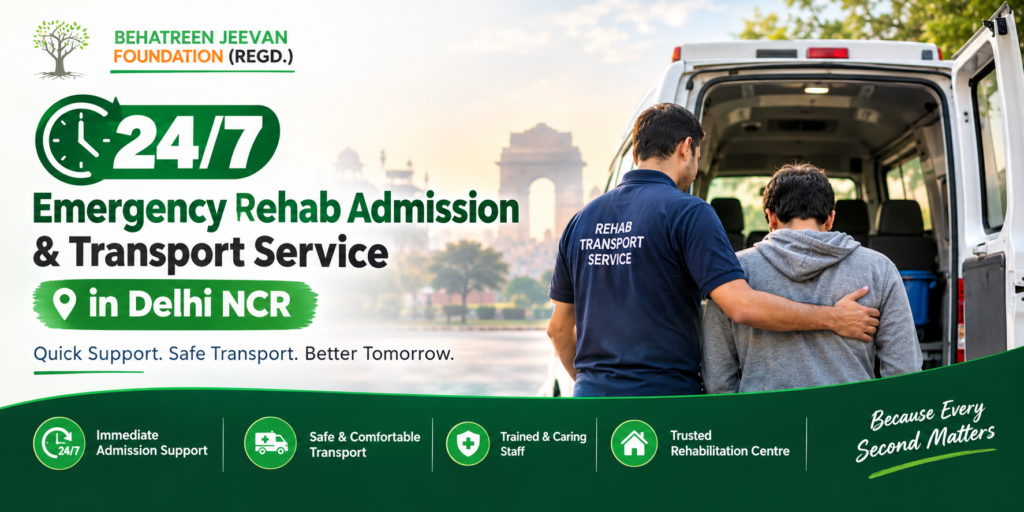
At Behatreen Jeevan Foundation, this runs day and night, weekends included. If someone arrives in the middle of the night or in bad shape, doctors, counsellors and support staff take over straight away. Nobody is turned away until morning.
When should you call?
Still debating whether tonight counts as an emergency? Trust that doubt. A phone call costs you nothing, and waiting can cost a lot. Families in Delhi, Ghaziabad and Noida should reach out right away if they notice any of the following:
- Dangerous withdrawal. Hands that shake and won’t settle, a seizure, seeing or hearing things that aren’t there, or sudden disorientation after the person abruptly quits alcohol or drugs. Delirium tremens are serious and can kill.
- Overdose risk. The person won’t respond, or their breathing has become very slow. If they’re unconscious or not breathing properly, call 112 for an ambulance first, then call us.
- Violent or paranoid behaviour. Outbursts, breakdowns, or fear that someone is out to get them while intoxicated.
- Physical decline. The person is badly dehydrated, too weak to stand, or showing a mental health flare-up that seems tied to years of heavy use.
- Suddenly, “okay, I’ll go.” Some people say yes for only a few minutes. If you move quickly, that yes can turn into treatment. If you wait, it often disappears.
How the pickup works
A lot of families think they’ll have to get their relatives into the car on their own. You won’t. Here’s how it goes:
1. You call the helpline. Dial +91-8929209703 at any hour. An intake counsellor picks up and asks a few things: what substance was used (alcohol, heroin, cocaine, pills, or a mix), how the person is right now, and where you are in Delhi, Ghaziabad, Noida, Gurgaon or nearby.
2. A team comes to you. Once the admission is approved, trained staff set out for your address in a vehicle meant for safe transport.
3. They talk first. At your door, the aim is to calm things down. The team speaks gently, listens, and takes its time until the person’s fear or anger eases and they agree to come along.
4. Someone watches them on the road. During the drive, staff keep an eye on the person’s vitals and mood.
5. A doctor sees them when they arrive. No waiting room. The doctor examines them, checks their vitals, and starts detox under medical supervision.
Why not just drive them yourself?
Families try it all the time, and I understand why. But putting someone who is intoxicated, shaking or angry into a private car is risky for both of you. Things can change in seconds.
A trained team makes it safer. They’ve seen mood swings, panic and agitation before, so they stay steady when you can’t. They cover East Delhi, South Delhi, Ghaziabad, Noida and the border areas, day and night. You also don’t have to fight with someone you love in your own living room. And the vehicle is discreet, so the neighbours don’t need to know.
Read also this blogs: Nasha Mukti Kendra in Delhi Cost
The first 24 hours inside
The first day sets things up for everything that comes after. Roughly, this is what happens:
- Doctors check liver function, blood pressure, mental state, and how much of the substance is in the body.
- A detox plan is made for that person, to ease withdrawal, cravings and pain.
- Nurses monitor vitals around the clock.
- A counsellor sits down with you and explains how the person is doing, what the plan is, and what daily life at the centre looks like.
Why families choose Behatreen Jeevan Foundation
We’re near the Bhopura Border, which makes us easy to reach from East Delhi, Sahibabad, Noida and nearby areas. When every minute counts, distance matters.
Here’s what you get:
- A helpline answered by experienced intake staff, all day and all night
- Care that continues after detox through counselling, 12-Step work, yoga and other holistic therapies
- Full confidentiality for the patient’s identity and medical records
Read also this blogs: How to Choose the Best Nasha Mukti Kendra
Centre: Jeewan Disha Foundation – Nasha Mukti Kendra, De-Addiction Centre & Rehabilitation Centre
Phone: +91-8929209703
Address: 1108, Gali No. 11, near Lal Market, Rajeev Colony, Sahibabad, Ghaziabad, Uttar Pradesh 201006
Website: https://behatreenjeevanfoundation.com/
Google Maps: Find us on Google Maps
Frequently Asked Questions
1. What does “emergency admission” actually mean?
Basically, you don’t wait. Someone can come in at 3 a.m. on a Sunday and a doctor will see them right then. Forms and questions can wait; their safety can’t.
2. How do I get someone picked up from home?
Ring +91-8929209703, any hour. Tell them what the person has been using, how they’re doing right now, and your area. If admission’s approved, our team sets off.
3. What if he or she refuses to go?
Don’t push or shout. It usually makes things worse. Our team arrives, sits down and talks, patiently, until the person feels safe enough to decide for themselves. No dragging, ever.
4. Should I call an ambulance instead?
Yes, if they’re out cold, gasping for air, or a seizure won’t stop. Call 112 first and don’t wait on us. Once they’re in medical hands, ring us about admission.
5. What happens once they’re inside?
A doctor checks their liver, blood pressure and overall health first. Then a detox plan, built around that person. Nurses stay through the night, and a counsellor sits with you.