
Introduction: The Hidden Progression of Chronic Alcohol Use
Nobody wakes up one morning with a ruined liver. That’s the first thing to understand about the effects of long-term alcohol abuse: they pile up slowly, over years, and most of the time the person living through them has no idea.
Take the evening drink. One peg after work becomes two, then three, then “just to sleep.” Ten years on, the same person is tired all the time, snaps at the kids, forgets conversations from last night, and puts it all down to a stressful job. The body has quietly learned to cope with the alcohol, so it doesn’t feel like a problem. Meanwhile things are going wrong where nobody can see them.
This piece looks at the long-term psychological and physical effects of alcohol abuse: what happens to the organs, what happens to the mind, and why trying to quit alone can backfire.
Physical Health Consequences of Prolonged Heavy Drinking
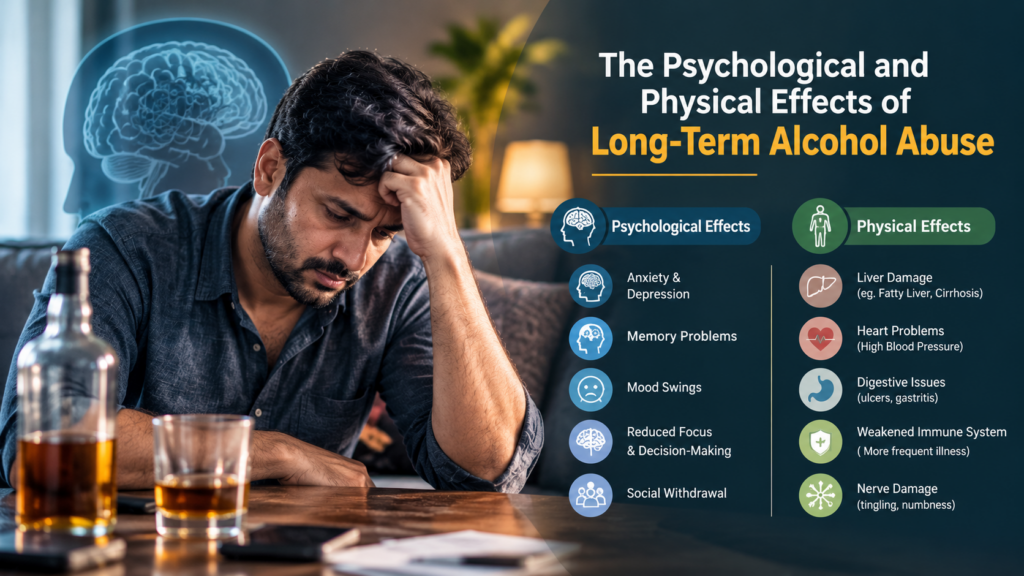
Heavy drinking over many years mainly damages the liver, heart, stomach, pancreas and immune system. The physical effects of alcohol dependence rarely turn up one at a time. A person with fatty liver often has a high blood pressure reading too, plus a stomach that’s been sore for ages.
1. Progressive Liver Damage (Fatty Liver to Cirrhosis)
Your liver breaks down most of the alcohol you drink, which makes it the main casualty.
Stage one is fatty liver. Fat collects inside the liver cells. It usually hurts nobody, so it goes unnoticed. Carry on drinking and the liver gets inflamed (alcoholic hepatitis), and now you may see yellow eyes, nausea, a bloated belly. After that comes cirrhosis, where healthy tissue is replaced by hard scar tissue and the organ struggles to filter blood.
The link between liver cirrhosis and alcohol is the one most people have heard of, but the useful bit is the timing. Fatty liver can improve if the drinking stops. Cirrhosis can’t be undone. A simple blood test and an ultrasound can show which side of that line someone is on, long before it starts to hurt.
2. Cardiovascular Strain and Heart Health Risks
Alcohol raises blood pressure, and over time it can unsettle the heart’s rhythm. Worse, years of heavy use can stretch and weaken the heart muscle itself. That’s called alcoholic cardiomyopathy.
A man in his forties starts getting out of breath on the stairs. His ankles swell by evening. He assumes he’s gained weight. Sometimes, though, his heart is simply not pumping the way it should.
3. Gastrointestinal Issues and Pancreatic Inflammation
Alcohol irritates the stomach lining. People who drink heavily for many years may develop stomach problems such as gastritis, acid reflux, or ulcers. These issues are sometimes treated with antacids repeatedly, while the role of regular alcohol consumption goes unnoticed. The scarier risk is bleeding, particularly from swollen veins in the food pipe when the liver is already damaged.
The pancreas gets forgotten. Pancreatitis causes a sharp, deep pain in the upper belly, often running through to the back. People who’ve had one attack tend to have another, and repeated attacks can affect digestion and blood sugar for good.
4. Immune System Suppression and Nutrient Deficiencies
Drinkers catch more infections, and they take longer to shake them off. Pneumonia is a common one.
Food is part of the story. When alcohol replaces dinner, the body loses out on protein and vitamins, and alcohol also makes it harder to absorb B vitamins and folate in the first place. You get anemia, constant fatigue, and cuts that take weeks to heal.
Psychological and Neurological Impact of Long-Term Alcohol Abuse

Alcohol changes the brain’s wiring over time, so the damage isn’t limited to a bad hangover. Anxiety, low mood and memory problems come first for many people, and in severe cases the brain is permanently injured.
1. Brain Chemistry Alterations: Depression and Anxiety
At first, alcohol quiets the brain. Then the brain adapts by firing harder to balance things out. Once the alcohol leaves the system, that extra activity has nothing holding it back, and the result is restlessness, dread or a flat, empty mood.
Here’s the cruel part of the psychological impact of chronic drinking: the drink that once calmed the nerves is now producing them.
Sleep gives it away. Someone might drop off quickly after a few drinks, then wake at 3 a.m. with a racing mind. By morning they’re exhausted and short-tempered, and the cycle restarts that evening.
Then there’s depression, which doesn’t always follow a neat order. It might have been there before the drinking, or the drinking might have caused it. Doctors usually treat both together, since fixing one while ignoring the other doesn’t tend to hold.
2. Cognitive Decline, Memory Loss, and Brain Atrophy
Research using brain imaging suggests that prolonged heavy alcohol use can reduce the volume of certain brain areas involved in memory, decision-making, planning and sound judgment. In daily life it’s subtle. They ask the same question twice. They miss a bank deadline, or forget why they walked into a room. They make strange, impulsive choices, like quitting a job on a whim.
Relatives sometimes say it feels like they’re losing the person while he’s still in the house. That’s long-term neurological damage from alcohol at work. The encouraging part is that some people regain clarity after months of staying sober, eating properly and seeing a doctor regularly. How much comes back differs from person to person, and nobody should promise a full recovery.
3. Wernicke-Korsakoff Syndrome (“Wet Brain”)
Wet brain syndrome from alcohol is the name people use for Wernicke-Korsakoff syndrome. It happens when the body runs dangerously low on thiamine, or vitamin B1, which heavy drinkers often do because they eat badly and absorb the vitamin poorly.
There are two stages. Wernicke’s comes first, with confusion, unsteady walking and strange eye movements. This one is an emergency, and treatment normally means thiamine injections. If it’s missed, it may turn into Korsakoff syndrome, where the person can’t form new memories and fills the gaps with stories that feel completely true to them. They aren’t lying.
Treated early, many people recover a good deal. Treated late, the changes often stay.
The Vicious Cycle: How Mental and Physical Health Intersect

Poor physical health drags the mood down, a low mood sends the person back to drinking, and the drinking makes the physical problems worse. Nobody gets out of that loop easily from the inside.
Here’s an example, invented but very recognisable. Rohan is 45 and drinks every night to switch off from work. He sleeps badly, so he’s edgy all day, so he drinks more. A routine health check shows abnormal liver numbers. Now he’s scared, and ashamed, and what does he want? A drink.
Then the rest follows. He’s too tired to exercise, he cancels on friends, the loneliness deepens his low mood. Forgetfulness means he skips the follow-up appointment.
You can see why the alcohol addiction health risks can’t be split into a “body” list and a “mind” list. They feed each other every single day.
Reversing the Damage: The Critical Need for Medical Supervision
Much of the damage can ease once someone stops drinking, but quitting suddenly after years of heavy use can be dangerous, so it’s best done with medical supervision.
This surprises a lot of families. When the body has grown dependent, abrupt withdrawal can trigger seizures or delirium tremens, a frightening state of confusion, fever and a racing heart. The nervous system has adapted to alcohol and needs time, and sometimes medication, to settle.
In a supervised detox, doctors keep an eye on vital signs, treat withdrawal symptoms, replenish thiamine and other nutrients, and look for problems nobody has spotted yet, such as liver disease or depression. But detox is only the first step. What helps people stay sober is counseling, treatment for any anxiety or depression, support from family, and a clear plan for the moments when cravings hit.
Recovery usually arrives in waves. Sleep and energy often improve first. Blood pressure, test results and mood come next. The liver and brain take longer, and how far they heal depends on how much harm was already done.
Conclusion & Taking the First Step Toward Healing
Alcohol damage is slow, and that’s why people put off dealing with it. But a weak liver or a foggy memory doesn’t have to be the end. The earlier someone gets help, the more there’s usually left to save.
If this sounds like you, or like someone at home, start with something small. Book a check-up. Get the basic blood tests done. Start by opening up to someone you feel comfortable with. Then look for a rehabilitation centre that provides medically supervised detox and continued support throughout the recovery process.
Organisations such as Behatreen Jeevan Foundation put out guidance for families dealing with addiction, and their blog is a decent place to start reading. Asking for help feels uncomfortable at first. For most people, it’s also where recovery begins.
Read Also this Blog: Early Signs of Drug and Alcohol Addiction
Medical Disclaimer & Review Notice:
This content has been medically reviewed by Dr. Akhil Dhanda (Reg. No. UPMC-59977) to ensure clinical accuracy and adherence to de-addiction recovery standards. The information provided is for educational purposes and should not replace professional medical diagnosis or treatment.